
Support at Home pathway
A short, goal-focused program — up to 16 weeks — built to help you regain strength, confidence and independence after an illness, a fall or a stay in hospital.
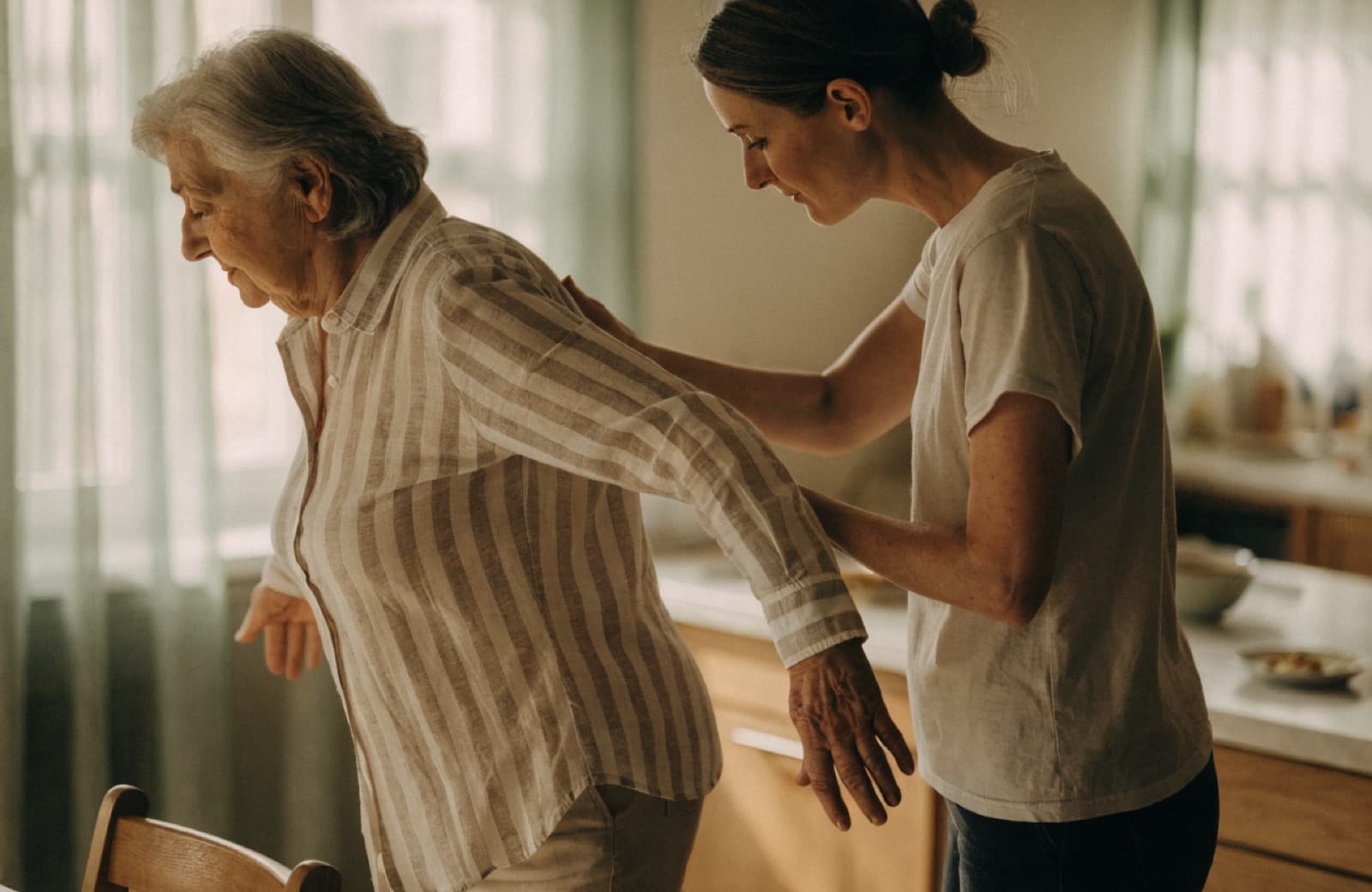
The Restorative Care Pathway is short-term, intensive and deliberately optimistic. Rather than simply putting services in place around a decline, it asks a better question: what have you lost that we could help you get back?
It runs for up to 16 weeks, is led by allied health professionals, and is organised entirely around goals you set — walking to the letterbox again, showering without help, getting back to church, cooking your own meals. It has its own funding, separate from your ongoing Support at Home budget, so taking it up doesn't cost you your regular services.
It's usually most valuable at a turning point, when things have recently changed.
After a hospital stay
When you've come home weaker than you went in.
After a fall
Or after a near miss that's knocked your confidence.
When mobility has changed
Walking, balance or stairs have become harder recently.
When strength has dropped
Everyday tasks now take more out of you than they used to.
When you'd benefit from therapy
And there's a realistic prospect of real improvement.
When you want to try
Motivation matters — this pathway rewards effort.
Physiotherapy, occupational therapy, exercise physiology, podiatry, dietetics and speech pathology, coordinated as one team.
A progressive program you can genuinely do at home, reviewed as you get stronger.
Medication review, wound care and monitoring of any condition affecting your recovery.
Practical help while you're rebuilding — tapering off as you regain the ability yourself.
Assistive technology or small modifications where they'll speed up your independence.
Support to get back out — because fear of falling can be as limiting as the injury itself.
Not clinical targets — the specific things you want to be able to do again.
Your Restorative Care Partner coordinates the allied health professionals you need.
Programs practised in your actual home, on your actual steps, with your actual kettle.
Regular check-ins against your goals, with the plan adjusted as you improve.
Before the 16 weeks end, we agree what ongoing support — if any — you still need.
The Restorative Care Pathway has its own dedicated budget under Support at Home. Taking it up doesn't come out of your ongoing services budget — and because clinical supports and care management carry no contribution, the allied health at the heart of this pathway is fully funded.
Talk to a real person about care for yourself or someone you love. There's no pressure, and no cost to ask.